Choosing the Right Venue for Your Party: 6 Factors That Make or Break the Night
party.dj editorial 14 October 20267 min read
Popular searches
Search by city
Private
Corporate
Events & nightlife
Operations & insight
Plans & getting started
We use necessary cookies to make the site work. With your consent we also use analytics and marketing cookies to improve the site and show relevant ads. Cookie policy
You have your guest list sorted, a date locked in and maybe even some ideas about the music. But there is one decision that sets the mood of your entire evening before the first guest even walks in: the venue. A good space keeps people dancing into the small hours, while the wrong choice can smother even the best playlist. In this guide we walk through the six factors that make or break your party, with extra attention on how the space works together with your DJ and sound setup.
The most common mistake is choosing a room that is too big or too small. A space that looks half empty feels cold and never fills the dance floor, while a packed room quickly becomes stuffy and uncomfortable. Allow for roughly one to one and a half square metres per guest for a standing party with a dance floor, and factor in extra room for a bar, cloakroom and seating area.
Think about how the layout changes over time too: for a seated dinner that turns into a party, you need flexible space you can transform. Always ask the venue about the difference between the theoretical maximum capacity and the comfortable number of guests for your type of party.
A stunning venue in the middle of nowhere will cost you guests. Look at the travel distance for the majority of your invitees, the availability of parking and how easy it is to reach by public transport. Especially when alcohol is being served, guests want to get home safely, so a venue close to a station or with a taxi rank nearby scores points.
If you are hosting a party in a big city, you often have more options with good connections. If you would rather book close to home, you can quickly find local DJs across the country who know the region and the popular venues. In cities like London or Amsterdam, an experienced DJ often knows exactly which venues are a pleasure to work with.
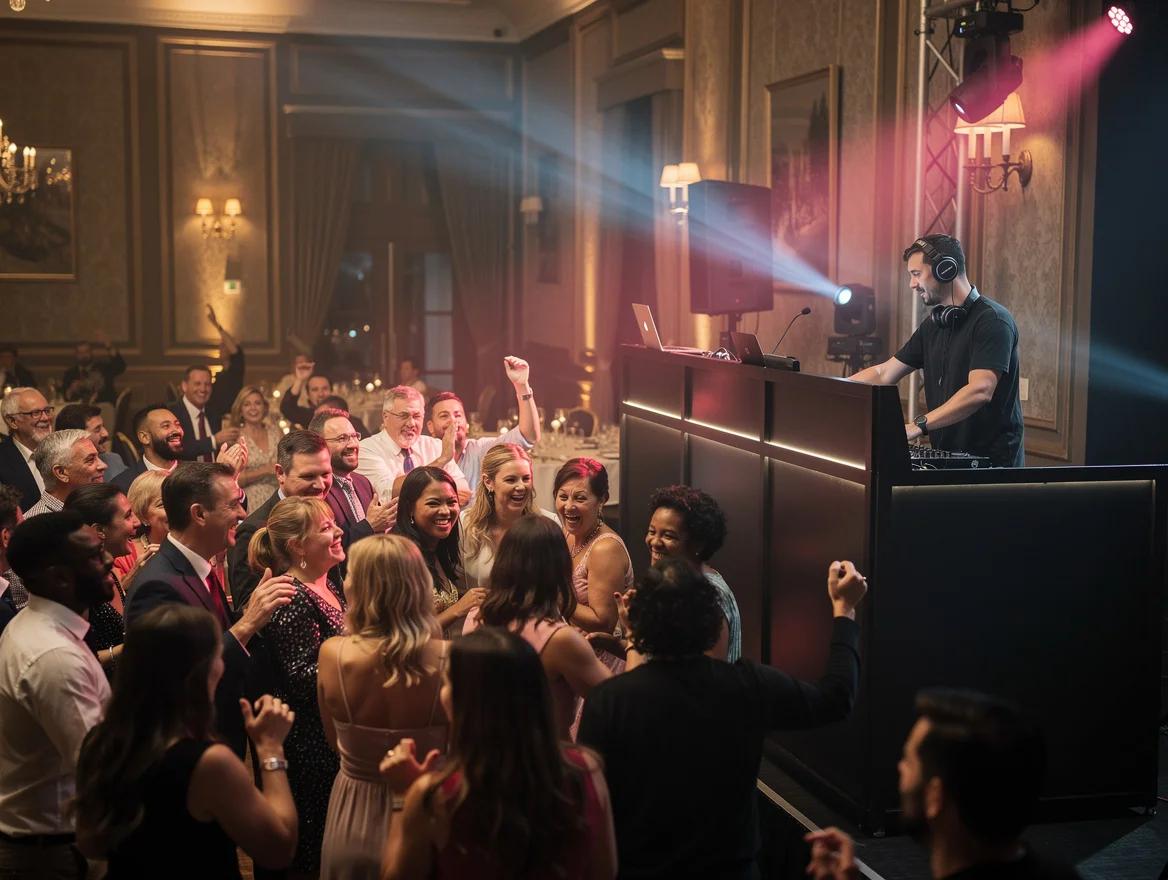
This is the factor that is most often forgotten and at the same time the most decisive for the atmosphere. A room with lots of hard, bare walls, high ceilings and plenty of glass lets sound echo, which makes the music muddy and conversations impossible to follow. Soft materials such as curtains, carpet and a room nicely filled with people actually dampen the reverb.
Just as important are the sound regulations. Many venues use a decibel limiter that automatically cuts the sound above a certain level, and that can literally bring a party to a halt. Ask in advance whether there is a limiter, what the maximum decibels are and how late you are allowed to play music. Share this information with your DJ straight away, because a professional will adjust their setup and set to suit it.
A DJ can turn up with the best equipment, but against a strict decibel limiter and an echoing room they will always lose out. So discuss the acoustics before you sign.
A DJ set with lighting and sound draws more power than people think. A single socket on one circuit is often not enough and can trip the fuses right in the middle of the build-up to the highlight of the evening. Ask the venue about the number of available circuits, where the connection points are and whether there is enough capacity for a complete setup.
Not sure about the technical side? Then go for the convenience of a DJ complete with lighting and sound, so you can be certain the equipment is matched to each other and to the space. Always discuss the layout of the room with your DJ beforehand, so there are no surprises on the day itself. Our 7 questions you should always ask before booking a DJ will help you on your way.
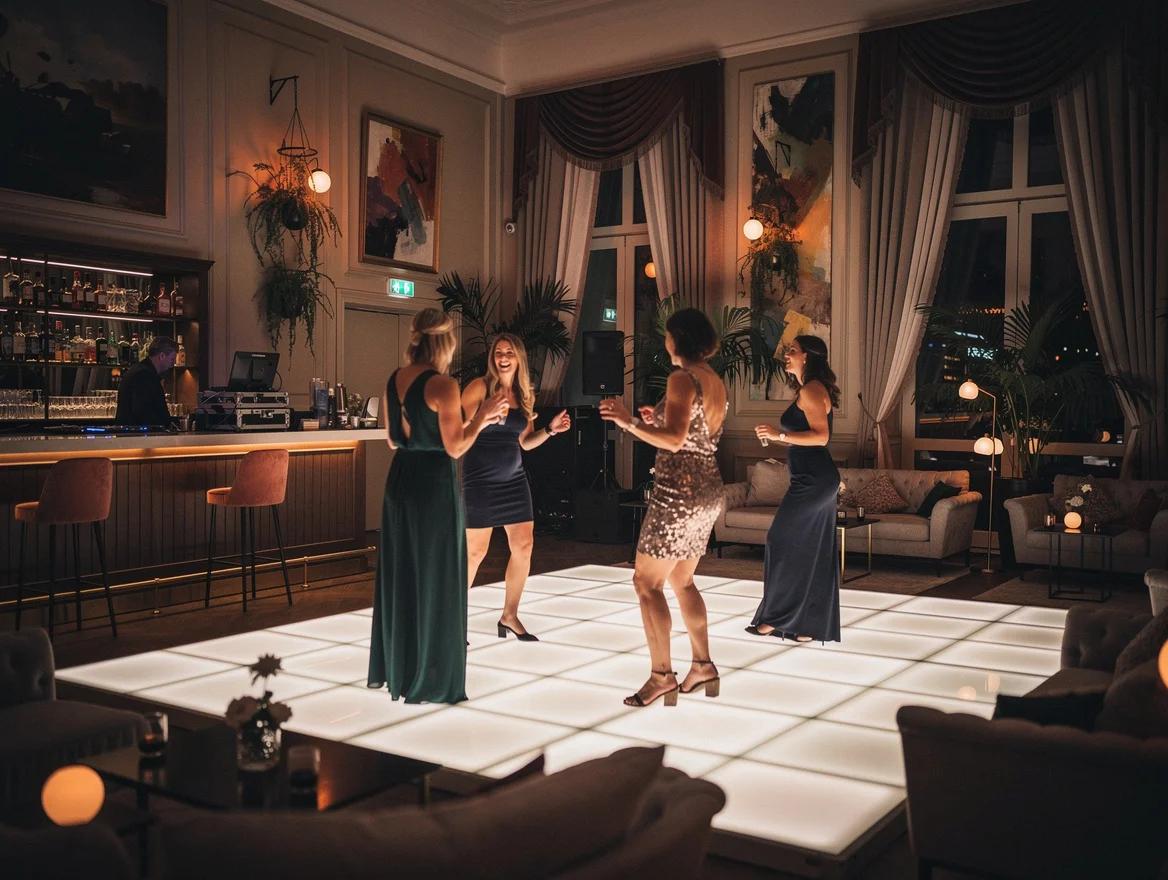
A venue has to match the tone of your party. A sleek industrial loft gives off a completely different vibe than a cosy barn or a chic grand café. Walk through the space in your mind the way your guests will: where do they come in, where is the bar, where is the dance floor and where can people step aside for a quiet chat?
The dance floor deserves extra attention here. Place it centrally, close to the bar and within sight of the DJ, so the energy naturally gathers there. A dance floor hidden away in a far corner often stays empty, no matter how good the music is. If you are hosting a party outdoors, different rules apply; feel free to read our tips on a successful garden party with the right music.
The rental price is only part of the story. Watch out for compulsory food and drink minimums, deposits, cleaning fees and surcharges for running past a certain time. A venue that looks cheap on paper can still end up more expensive than an all-in room once the extra costs are added.
Include the music in your total budget right away too. If you want to know roughly what a DJ costs, take a look at the overview of current DJ prices, so you can realistically weigh up venue and entertainment against each other. That way you avoid having to cut back at the end on the very element that makes the evening unforgettable.
Once you have a venue in mind and know how late you are allowed to play music? Then it is smart to start arranging the rest early. Through party.dj you can easily compare and book a DJ who fits your space and your guests perfectly, from an intimate birthday to a big corporate party.
For a standing party with a dance floor, allow for roughly one to one and a half square metres per guest, plus extra room for the bar, cloakroom and a seating area. Always ask the venue about the comfortable number of guests rather than just the maximum capacity.
A decibel limiter automatically cuts the sound above a set level to prevent noise disturbance. Such a limiter can literally bring your party to a halt, so ask in advance whether one is fitted, what the maximum is and share this with your DJ.
Ideally choose your venue first, because the space determines the acoustics, the sound rules and the technical possibilities. After that you book a DJ who can adapt to that specific situation, preferably well in advance so your favourite is still available.
Ready to book your DJ?
Find a DJMore tips and inspiration to help you plan the perfect event.
Check whether there are enough sockets on multiple circuits, whether there is a suitable spot with a view of the dance floor and whether there is time and room for setting up and packing down. Also agree clearly on who provides lighting and sound.
Often that comes down to the layout. A dance floor in a far corner, away from the bar and out of the DJ's sight, attracts few people. Place the dance floor centrally and close to the bar so the energy naturally gathers there.
Watch out for compulsory food and drink minimums, deposits, cleaning fees and surcharges for running past a certain time. Factor these into your total budget and also account for the cost of a DJ and entertainment.